Designed for the
planet. Built for luxury.
The Gateway Kilimanjaro is conceived as a net-positive, low-impact sanctuary — where exceptional hospitality and environmental responsibility are inseparable.
Luxury without compromise.
Progress without pretence.
In East Africa, sustainability is not a marketing gesture — it is operational necessity. Grid instability, water scarcity, and fragile ecosystems demand properties that generate, capture, and regenerate.
The Gateway Kilimanjaro meets these constraints not as limitations, but as design briefs. Every system is engineered to reduce operational expenditure while elevating guest experience.
How we tread lightly.
Six integrated systems reduce environmental impact, lower long-term operating costs, and create a deeper connection to the surrounding landscape.
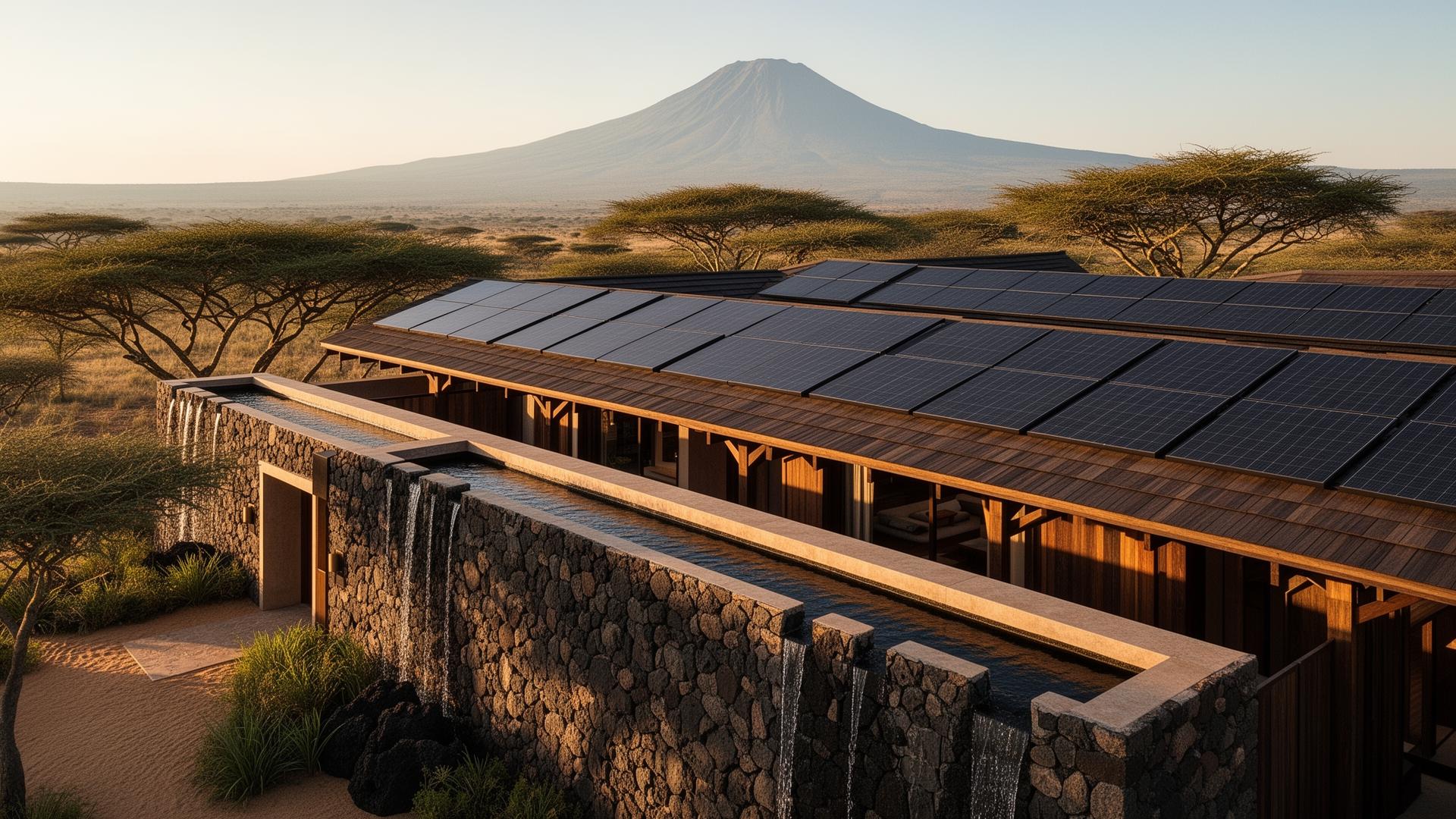
The entire resort operates on photovoltaic arrays integrated into pavilion rooftops. Zero reliance on the grid, zero diesel generators.
Advanced lithium battery banks store surplus daytime generation, ensuring seamless power through the night and during overcast conditions.
On-site atmospheric water generation and deep-well backup systems guarantee guest comfort independent of municipal supply.
Every roof surface feeds into a central harvesting system. Captured water is filtered and recycled for irrigation and non-potable use.
Structures are built from quarried local stone and certified indigenous hardwoods. Reduced transport emissions, authentic material palette.
Only indigenous species are planted — acacias, aloes, and wild grasses — restoring habitat, eliminating irrigation demand, and inviting wildlife.
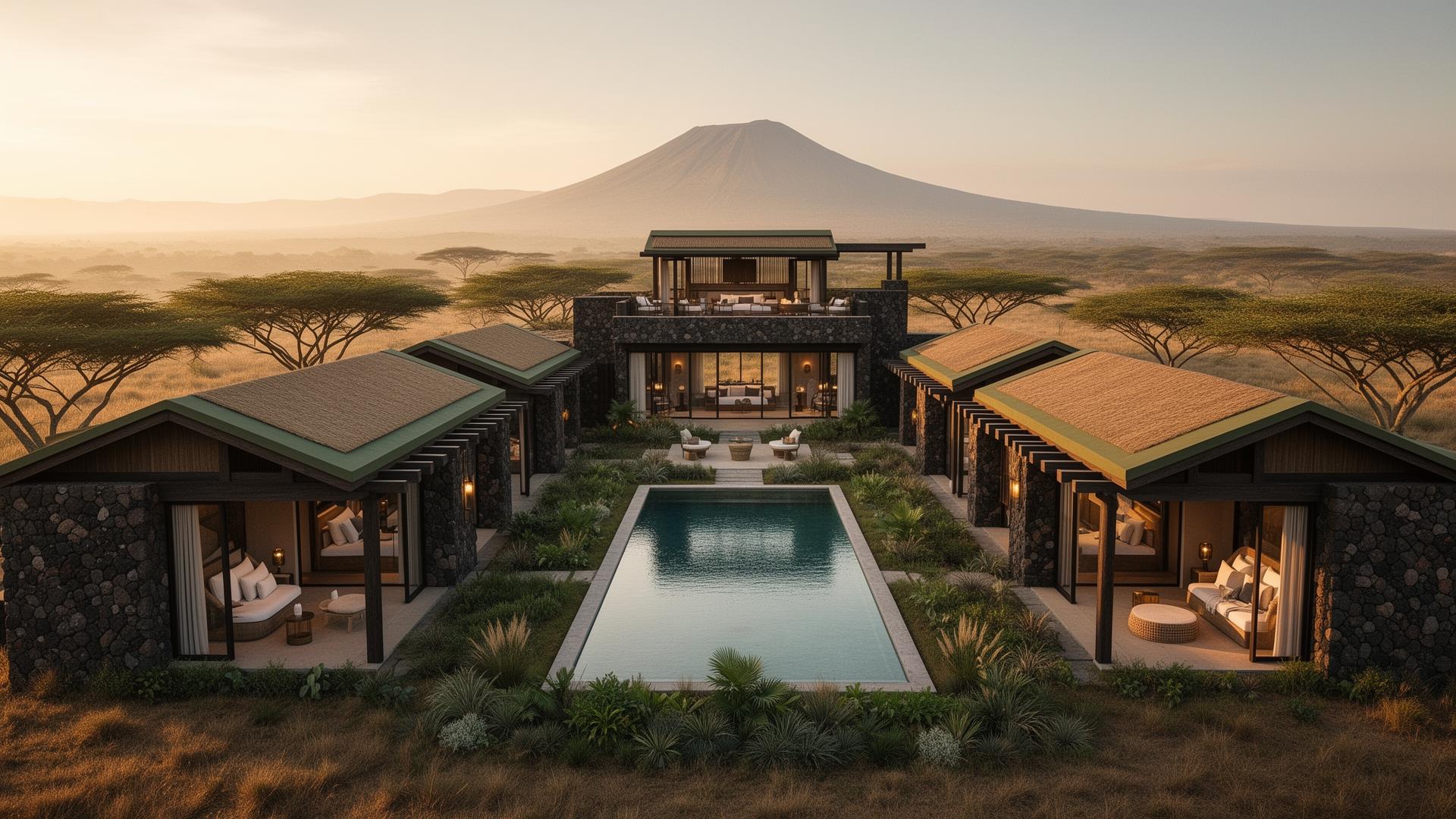
A resort that belongs to the terrain.
The future of African hospitality is regenerative.
The Gateway Kilimanjaro is built to exceed international ESG mandates and appeal to capital partners, tourism boards, and discerning travellers who expect their stay to leave the lightest possible footprint.